
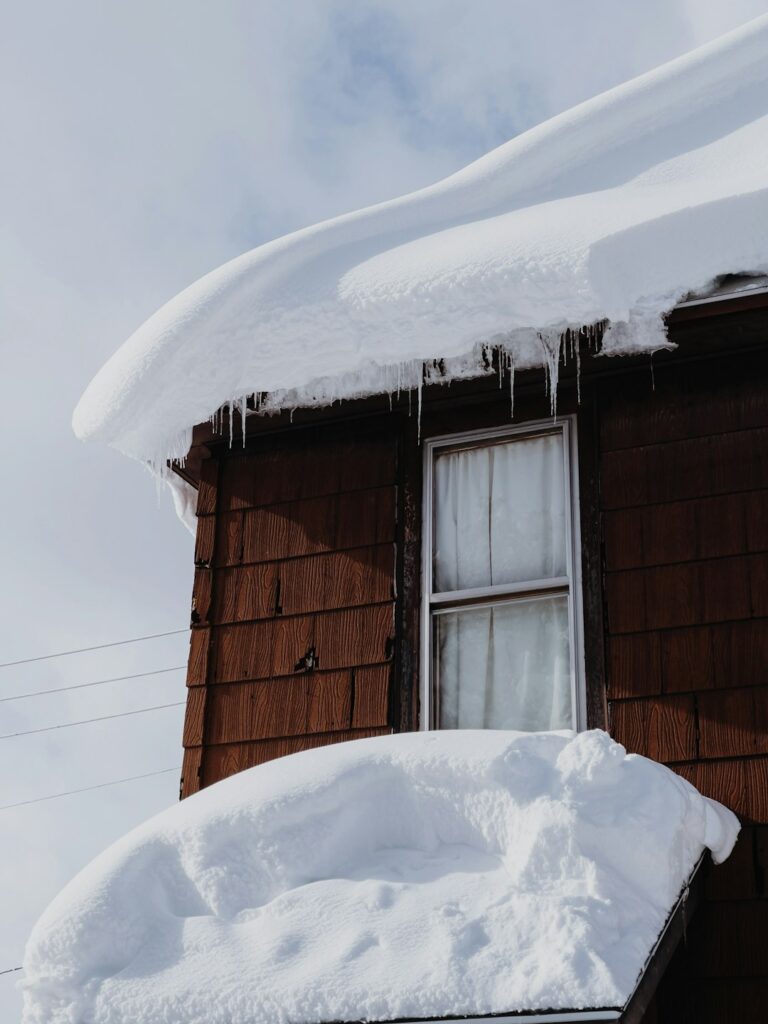
Why should a roof be prepared before winter?
A roof should be checked before the first major snowfall because small defects can become active leaks, ice damage, or structural concerns once temperatures fall. In West Henrietta, winter conditions may include repeated snow, freezing rain, strong wind, and cycles of thawing and refreezing that place stress on roofing materials and drainage systems.
A pre-winter inspection does not need to be complicated. The goal is to identify problems while the roof is dry, accessible, and easier to repair.
Look for:
- Missing, cracked, curling, or loose shingles
- Exposed fasteners or areas where roof materials appear lifted
- Damaged flashing around chimneys, plumbing vents, skylights, and wall intersections
- Sagging areas on the roof surface or along eaves
- Granules collecting heavily in gutters or near downspouts
- Water stains on attic wood, ceilings, or upper walls
- Daylight visible through the roof deck in the attic
A roof that appears acceptable from the ground may still have trouble spots. Flashing and roof penetrations deserve particular attention because they are common entry points for water.
How should gutters and downspouts be prepared?
Gutters should be cleared of leaves, twigs, roofing granules, and other debris before freezing weather arrives. Blocked gutters prevent meltwater from draining properly and can contribute to overflowing, saturated fascia boards, and ice buildup along the roof edge.
After cleaning, check that:
- Gutters are firmly attached and do not pull away from the roofline
- Seams and end caps are not leaking
- Downspouts are connected securely
- Water is directed several feet away from the foundation
- Downspout outlets are not blocked by soil, leaves, or ice-prone debris
Downspouts that discharge close to the house can create additional problems during freeze-thaw cycles. Water may collect near the foundation, freeze, and later enter cracks or low areas around the structure.
Do not assume that gutter guards eliminate winter maintenance. Guards can reduce debris but may still collect leaves, shed granules, or allow ice to form at the roof edge.
What should homeowners check in the attic?
The attic provides useful clues about how a roof is handling winter conditions. It should be checked on a dry day for damp insulation, darkened wood, mold-like spotting, rusted nails, or water trails.
Ventilation and insulation work together. Warm air escaping from the living space can heat portions of the roof deck, melting snow above those areas. Meltwater may then travel toward colder eaves and refreeze, creating an ice dam.
Common sources of attic heat and moisture include:
- Gaps around plumbing vents, electrical fixtures, and recessed lights
- Unsealed attic hatches
- Bathroom fans venting into the attic instead of outdoors
- Insufficient insulation near the roof edges
- Blocked soffit vents
- Poorly balanced intake and exhaust ventilation
The purpose of ventilation is not simply to make the attic cold. It is to reduce temperature differences across the roof and allow moisture to escape. Vent openings should remain clear of insulation and stored belongings.
How can ice dams be reduced?
Ice dams are ridges of ice that form along the lower edge of a roof and interfere with drainage. They are more likely when snow remains on the roof while heat escapes through the attic or roof assembly.
The most effective prevention generally involves:
- Improving air sealing between the living space and attic
- Installing adequate insulation
- Keeping soffit and roof vents clear
- Maintaining a consistent roof temperature
- Removing heavy snow safely when conditions require it
Ice dams are not caused only by clogged gutters. Gutters can make the buildup more noticeable, but the underlying issue is often uneven roof temperatures.
Do not chop at an ice dam with a hammer, shovel, or sharp tool. This can damage shingles, flashing, and the roof deck. Pouring salt or chemical deicers on the roof can also corrode metal components, harm plants, and create uncontrolled runoff. If an ice dam is causing active interior leakage, the situation may require specialized equipment and safe access methods.
Should snow be removed from the roof?
Most roofs are designed to carry ordinary seasonal snow, but heavy, wet snow and uneven drifting can increase the load. The risk is greater on low-slope roofs, older structures, additions, porches, and areas where snow collects against higher roof sections.
Warning signs that deserve prompt attention include:
- Noticeable sagging in the roofline or ceiling
- Doors or windows suddenly sticking
- New cracks in ceilings or walls
- Loud popping or creaking from the structure
- Interior leaks during or shortly after snowfall
- Snow drifting deeply into one section of the roof

Roof snow removal is hazardous, especially when surfaces are icy or hidden beneath fresh snow. Walking on a snow-covered roof can damage shingles and increase the chance of a fall. Snow should not be piled against utility equipment, doors, walkways, or lower roof sections.
If snow removal is necessary, the method should be appropriate for the roof design and completed without striking or scraping the roofing surface.
What outdoor items can affect the roof?
Before winter storms, trim weak or dead branches that overhang the roof. Falling limbs can puncture shingles, damage flashing, block gutters, or strike chimneys and vents. Branches should not be cut from a roof during icy or windy conditions.
Also secure or relocate items that could blow into the roof, such as:
- Lightweight outdoor furniture
- Loose decorations
- Unsecured tools
- Temporary structures
- Containers that may block drainage
Check that chimney caps, plumbing vent covers, and exhaust outlets are secure. Snow should not be allowed to block vents that serve heating equipment, dryers, or bathroom fans. Blocked exhaust can create moisture problems or, in some cases, dangerous indoor air conditions.
What should be done after a winter storm?
A quick visual check after a major storm can identify damage before it spreads. From the ground, look for missing shingles, unusual roofline changes, hanging gutter sections, fallen branches, and large areas of snow or ice buildup.
Inside the home, inspect ceilings, upper walls, attic insulation, and areas around chimneys or skylights for dampness. Water may appear some distance from the actual entry point because it can travel along roof decking, framing, or insulation.
Avoid climbing onto an icy roof or using ladders on snow-covered ground. If a storm creates structural warning signs, active leaking, electrical hazards, or unsafe access conditions, professional evaluation is justified because the hazard cannot be assessed safely from the ground.
What is the best winter roof checklist?
Before sustained freezing weather, confirm that:
- The roof surface and flashing have no obvious damage
- Gutters and downspouts are clear and securely attached
- Water drains away from the foundation
- Attic insulation is dry and ventilation paths are open
- Bathroom and kitchen exhaust fans vent outdoors
- Overhanging limbs have been addressed
- Roof penetrations and chimney areas show no signs of leakage
- Snow-removal tools and emergency supplies are stored safely
- Family members know where interior water shutoffs and electrical panels are located
Preparing a roof before winter is mainly a matter of drainage, moisture control, safe observation, and early attention to defects. These steps are especially useful in a climate where snow can accumulate, melt, and refreeze several times during the season.
